























Cosmonautics Day in the BRICS countries
We talk about the most significant space pioneers
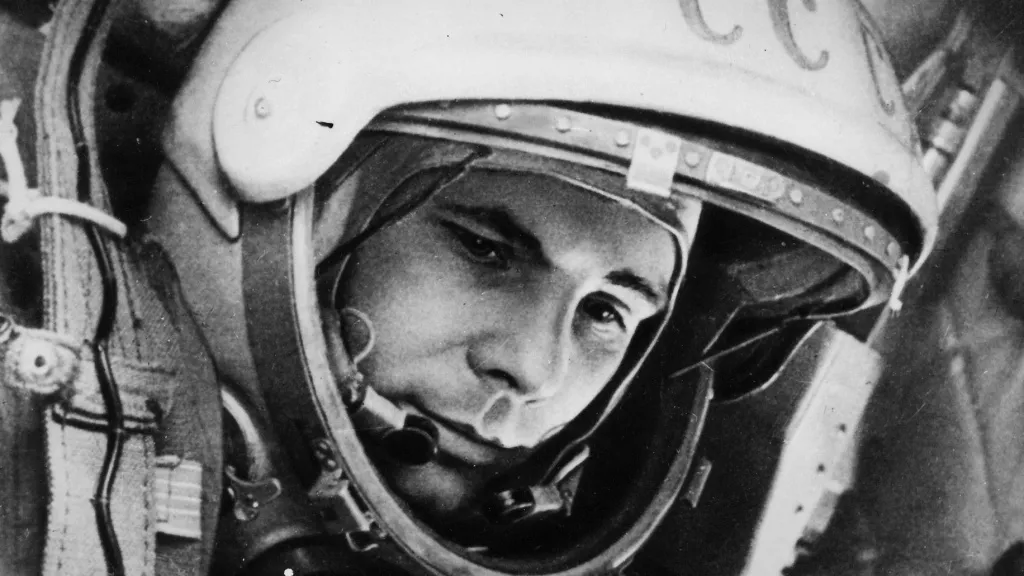
A special date for Russia and the world is 12 April 1961, the date of the first manned space flight by Yuri Gagarin. This historic event paved the way for space exploration for the benefit of all humanity.
Sixty-two years have passed since a Soviet cosmonaut on the Vostok 1 spacecraft launched from the Baikonur Cosmodrome and orbited planet Earth for the first time in the world, a landmark event for the industry. The near-Earth space flight lasted 108 minutes.
The day of the first manned space flight became an official holiday a year later, in 1962. By decree of the Presidium of the Supreme Soviet of the USSR, it was named Cosmonautics Day.
The world's first female cosmonaut was also a Russian, Valentina Tereshkova. She embarked on her flight, which lasted nearly three days, on 16 June 1963 in the Vostok 6 spacecraft. Incidentally, this year the Bank of Russia is putting into circulation a commemorative 3 rouble silver coin "60th Anniversary of the first female cosmonaut's flight into space" dedicated to Tereshkova. The coin is made of 925 sterling silver and has a diameter of 39 millimeters. It has a print run of 3,000 units.
As we can see, Russians, for obvious reasons, have known and honoured the names of Yuri Gagarin, Valentina Tereshkova and other Russian cosmonauts who have made history since their school years and love this holiday. But what about other BRICS countries?
Alexander Stenko, a political scientist, religious scholar and expert at the Peoples' Friendship University of Russia (RUDN), said in an exclusive comment for TV BRICS that other countries, including Moscow's BRICS partners, do not celebrate the date as widely, but official calendars of all five countries include World Air and Space Day, which was established back in November 1968 at the 61st General Conference of the International Aviation Federation and is dedicated to the exploits of Soviet cosmonauts.
And following a unanimous decision by the UN General Assembly, as of 2011, 12 April is also referred to globally as the International Day of Human Space Flight.
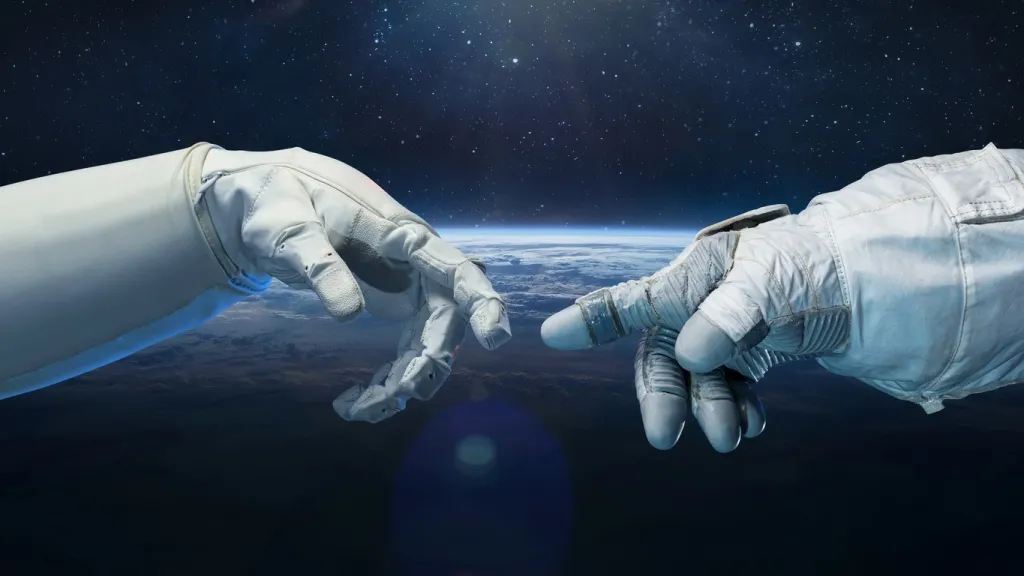
There is a general consensus in the BRICS countries, both in scientific circles and among ordinary citizens, on the importance of Gagarin's feat, who in 108 minutes of orbital flight discovered space for humanity and ushered in a new era of global scientific and technological development.
The expert noted that one of the first examples of such recognition was when a Soviet cosmonaut received the Brazilian State Order of Merit for Aeronautics, awarded to Gagarin on 2 August 1961 by President Janio da Silva Cuadros. The memory of Gagarin is also supported in the BRICS countries by numerous monuments. They can be found in cities ranging from Beijing, China, to Calcutta, India, to Hermanus, South Africa, home of the South African National Space Agency's (SANSA) research centre.
"All of Russia's BRICS partners are now actively developing their own space exploration programmes, and their citizens regularly join the pantheon of cosmonaut heroes discovered by Gagarin. And a number of the association countries have introduced their own national names for the profession"

Alexander Stenko Expert of Peoples' Friendship University of Russia
China, for example, holds its Taikonauts in high regard (most notably the first, Yang Liwei, in 2003).
In India, Viomanaut Rakesh Sharma, who travelled beyond the Earth's atmosphere in 1984, is similarly revered.
Brazilian pioneer astronaut Marcos Pontes became so popular with the public after his flight to the International Space Station in 2006 that, until last year, he served as Minister of Science, Technology and Innovation and is now a member of the country's Senate.
Similarly, programmer and IT entrepreneur Mark Shuttleworth of South Africa, who in 2002 became one of the first commercial space tourists, has a similarly acclaimed status as a national favourite.
To find out how the Five states have fought and continue to fight for the peaceful exploration of outer space and what our leaders have planned for space, watch the film BRICS Space: for sustainable development – both on Earth and beyond.
A television film dedicated to the 60th anniversary of the first manned flight into space was created by the editors of five partner media outlets of the TV BRICS network with the support of Roscosmos TV.
Photo: istockphoto.com
-
![]()
 Technology01.11.26Kazakhstan to launch third high-performance supercomputer by end of 2026
-
![]()
 Technology31.10.26Chinese scientists develop membrane to make industrial carbon capture more efficient
-
![]() Technology30.10.26Chinese scientists discover three planets that survived their star’s expansion
-
![]()
 Technology30.10.26Indonesia plans to select site for its first nuclear power station by 2027
-
![]() Technology28.10.26Chinese scientists discover single neurone can perform complex thought processes
-
![]()
 Technology28.10.26Oman’s oil company to introduce AI, drones and robots to manage oilfields


























-
![Daniel Francisco Chapo]()
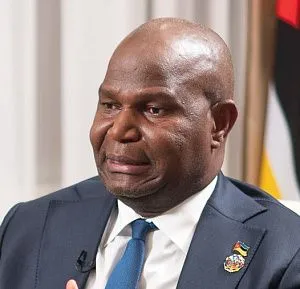
 Daniel Francisco ChapoMozambican President"We have excellent relations with Brazil, Russia, India and China, as well as with our neighbour, South Africa"
-
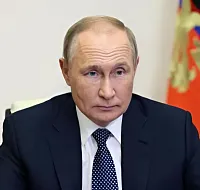
![Vladimir Putin]() Vladimir PutinRussian President"Construction of the Bushehr Nuclear Power Plant continues. We are also cooperating in the humanitarian sphere; the number of Iranian students studying at our universities, for example, has reached about 10,000. In late September and early October, a series of vibrant events was held in various Russian cities as part of the Iranian Culture Festival – namely, in Moscow, Kazan and Astrakhan"
-
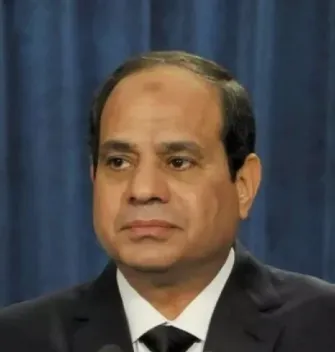
![Abdel Fattah El-Sisi]() Abdel Fattah El-SisiEgyptian President"Today, we are striving to strengthen Russia-Egypt strategic partnership and hope to expand cooperation between our countries across various sectors – primarily in the economy and trade, as well as in areas related to grain supplies, which are of great importance to our nation"
-
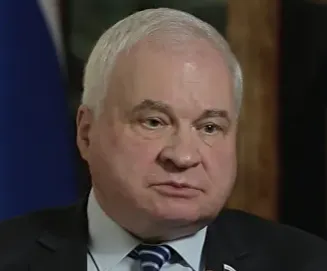
![Andrey Denisov]() Andrey DenisovChairman of the Federation Council Committee on Foreign Affairs"Today, BRICS is not simply a dialogue platform for member countries but a genuine mechanism for coordinating positions on sustainable development and reforming global financial and economic institutions"